
These plans are best suited for individuals with a lower risk appetite as they provide guaranteed benefits.

The Delhi high court on Friday sought response from the Central Bureau of Investigation (CBI) on the bail plea by former managing director and chief executive officer of the National Stock Exchange (NSE) Chitra Ramkrishna in connection with the co-location case. Justice Sudhir Kumar Jain issued notice on the bail application and listed the case for further hearing on May 31. The trial court had dismissed the bail plea of the former NSE boss on May 12 and said that no ground for bail was made out at this stage.

More than a dozen entities, both domestic and foreign, had come under the regulatory glare over alleged short-selling before and after the publication of the Hindenburg research report against Adani Group, two people familiar with the development said. The Securities and Exchange Board of India (Sebi), which is examining the rise in stock values of Adani Group in the past few years, is also scrutinising the trade data and trade pattern of these entities allegedly involved in short-selling and made significant profit. Enquiries in the trade pattern of these entities reflected a profit of over Rs 30,000 crore, pre- and post-Hindenburg saga, said one of the two people.

A plea has been filed in the Supreme Court seeking a direction to the Centre to constitute a committee monitored by a retired apex court judge to enquire and investigate into the Hindenburg Research report which made a slew of allegations against the business conglomerate led by industrialist Gautam Adani. The fresh public interest litigation (PIL), filed by advocate Vishal Tiwari, has also sought directions to set up a special committee to oversee the sanction policy for loans of over Rs 500 crore given to big corporates. Last week, another PIL was filed in the apex court seeking prosecution of short seller Nathan Anderson of US-based firm Hindenburg Research and his associates in India and the US for allegedly exploiting innocent investors and the "artificial crashing" of Adani Group's stock value in the market.

News broadcaster New Delhi Television Ltd's (NDTV's) promoter firm RRPR Holding said on Monday that it had transferred shares constituting 99.5 per cent of its equity capital to Adani group-owned Vishvapradhan Commercial (VCPL). The transaction was done on Monday, RRPR Holding said in a disclosure to the stock exchanges, in consonance with a conversion notice, dated August 23, 2022, issued by VCPL. This follows the expiry of the two-year restraint imposed by the Securities & Exchange Board of India (Sebi) on November 26, it said.

The Securities and Exchange Board of India, which had earlier rejected the MCX-SX's plea, was asked by a bench of justices Aftab Alam and C K Prasad to reconsider it within three months.

Sebi on Thursday sent a notice to fugitive businessman Mehul Choksi asking him to pay Rs 5.35 crore in a case pertaining to fraudulent trading in the shares of Gitanjali Gems Ltd and warned of arrest and attachment of assets as well as bank accounts if he fails to make the payment within 15 days. The demand notice came after Choksi failed to pay a fine imposed on him by the Securities and Exchange Board of India (Sebi). Choksi, who was the chairman and managing director as well as part of promoter group of Gitanjali Gems, is the maternal uncle of Nirav Modi.

Sebi on Wednesday ordered the attachment of bank and demat accounts of Sahara Group chief Subrata Roy and three others to recover Rs 6.48 crore for violating regulatory norms by two group companies. The recovery proceedings have been initiated against these four persons for violating regulatory norms in the issuance of optionally fully convertible debentures (OFCDs) by two group companies. Apart from Sahara, others whose bank and demat accounts were attached are Ashok Roy Choudhary, Ravi Shanker Dubey and Vandana Bharrgava.

Capital markets regulator Sebi on Tuesday sent a notice to NSE's former chief Chitra Ramkrishna asking her to pay Rs 3.12 crore in a case related to governance lapses at the stock exchange, and warned of arrest and attachment of assets and bank accounts if she fails to make the payment within 15 days. The notice came after Ramkrishna failed to pay the fine imposed on her by the Securities and Exchange Board of India (Sebi). In an order dated February 11, Sebi had slapped a penalty of Rs 3 crore on Ramkrishna for alleged governance lapses in a case related to the appointment of Anand Subramanian as the Group Operating Officer and Advisor when she was at the helm of NSE as its managing director and chief executive officer, as well as for sharing confidential information of the company with an unidentified person.

Sundararaman Ramamurthy has been an interesting choice for the publicly-listed BSE, which has seen its chief move to bigger rival -- the National Stock Exchange (NSE) -- in July. Having spent nearly two decades at the country's largest bourse, Ramamurthy is among the early architects of NSE and understands all the cogs of the exchange wheel like only a few others in the country. Just like NSE's core team, which includes its founder RH Patil, the 59-year-old Ramamurthy has worked at the Industrial Development Bank of India (IDBI) before moving to NSE in 1995.

Without naming Adani group specifically, the capital markets watchdog said in a statement that unusual price movement in the stocks of a business conglomerate has been observed in the past week.

Markets watchdog Sebi on Friday directed stock exchanges to impose "financial disincentives" on stock brokers for technical glitches at their end, amid instances of snags at the brokers' end impacting the overall trading system. Besides, the stock brokers would have to inform the bourses within one hour of any glitch happening in their trading sysstems as well as submit a preliminary incident report in one day. As part of tightening the regulations, Sebi also said that the bourses should disseminate on their websites the instances of technical glitches occurring in the trading systems of stock brokers along with the Root Cause Analysis (RCA) of such issues.

Fund managers often find themselves selling bonds at prices below their fair value to meet redemption demands. Investors are the ultimate losers in this. CDMDF aims to remedy this by stepping in and purchasing securities at their fair value in such times.
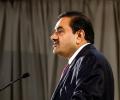
In the context of market integrity, the IRAI and RBI should go over the minutes of the LIC and SBI board meetings when the decisions to invest in Adani equity or debt were taken, notes Jaimini Bhagwati, former World Bank treasury professional.

Three companies -- FirstMeridian Business Services Ltd, IRM Energy Ltd and Lohia Corp -- have received capital markets regulator Sebi's go-ahead to raise funds through initial public offerings (IPOs). These firms, which filed their preliminary IPO papers with the markets regulator between September 2022 and January 2023, obtained the observation letters during February 21-24, an update with the Securities and Exchange Board of India (Sebi) showed on Tuesday. In Sebi parlance, observation implies go-ahead to the company to float the initial share-sale.

Facing opposition fire for exit polls allegedly being used for stock market manipulation, Axis My India's chief Pradeep Gupta has said he is open to facing all kinds of investigations and it would help do business in a much better way if the government frames specific regulations for pollsters.

Stock exchanges and other market infrastructure institutions as well as their top officials are liable to face penalties for lapses in handling and recitfying technical glitches, with Sebi putting in a place a stricter compliance system driven by "financial disincentives". The markets watchdog has come out with a detailed Standard Operating Procedure (SOP) for Market Infrastructure Institutions (MIIs) less than five months after a technical glitch halted trading at the country's largest bourse NSE for nearly four hours. There will be a "financial disincentives" structure for MIIs -- stock exchanges, clearing corporation and depositories -- for any business disruption beyond pre-defined time, according to a circular issued on Monday.
Zaggle Prepaid, Cyient DLM, Healthvista India, Rashi Peripherals and Vishwaraj Sugar Industries have obtained the green signal to launch their initial public offerings (IPOs). The approvals come at a time when capital raising by way of IPOs has slowed to a crawl, with only four issues hitting the market so far this calendar year. Recently, the Securities and Exchange Board of India (Sebi) issued final observation letters on their draft red herring prospectuses (DRHPs), which is akin to getting approval to hit the markets.

'The success of one or two IPOs does not dictate whether the upcoming IPOs will be successful or not, but it certainly indicates that the markets and investors are enthusiastic about startup IPOs.'

Mutual funds (MFs) are lining up distinguished new fund offerings (NFOs) for the next financial year to win over investors after a lukewarm response to product launches in the 2022-23 financial year (FY23). NFOs drew a lukewarm response in FY23 as launches were mostly in the passive debt space, which has a comparatively lower popularity among retail investors. The limited launches in equity space also failed to rake in huge sums due to subdued investor sentiments in a volatile market.

'It will dictate the flow of funds into the index. We will maintain caution on mid/smallcaps.'

In a significant win for the Adani group, the Supreme Court on Wednesday refused to transfer the probe into allegations of stock price manipulation by the Indian corporate giant to a special investigation team or the CBI, saying market regulator SEBI was conducting a "comprehensive investigation" and its conduct "inspires confidence".

'He had a lovely, lovely, sense of humour, very subdued and very, very subtle, but it was very, very, prominent.'

"The Securities and Exchange Board of India is working on the concept paper on SME exchanges. It may soon release the guidelines," Minister of State for Micro, Small and Medium Enterprises Dinsha Patel said at a seminar jointly organised by MCX-SX and the Society for Capital Market Research and Development in New Delhi on Tuesday.

The initial public offering (IPO) market has seen some momentum of late with robust responses to recent issues. However, only some have been able to ride the wave. So far in 2023, 23 companies have let their approval granted by the markets regulator - the Securities and Exchange Board of India (Sebi) - lapse.

Oravel Stays - which operates hospitality tech firm OYO - on Friday pre-filed its Draft Red Herring Prospectus with stock market regulator Sebi, sources said. Sources close to the company told PTI, OYO may launch its initial public offering (IPO) around Diwali this year. Unlike the traditional route where companies have to launch the IPO within 12 months from the Sebi approval, or final observation; in the pre-filing route, an IPO can be floated within 18 months from the date of Sebi's final comments.

The National Stock Exchange (NSE) has got into firefighting mode to control the reputational damage caused by the Securities and Exchange Board of India's (Sebi's) order against its former managing director and chief executive officer Chitra Ramkrishna and others. According to sources, the exchange's management over the past one week has met several key stakeholders, including officials in the finance ministry and Sebi, major shareholders, and trading members, trying to distance itself from the controversy. The exchange plans to hold more meetings in the coming week to ensure that trading volumes and confidence in the bourse don't get impacted, they added.

The Securities and Exchange Board of India's (Sebi's) investigation into the Hindenburg allegations is making slow progress when it comes to obtaining information from overseas regulators, particularly around ultimate beneficial ownerships of certain foreign portfolio investors (FPIs), said people in the know. "Establishing ultimate beneficial ownerships for FPIs is a very complex exercise. "Several jurisdictions allow omnibus structures where the end beneficiaries are not required to be captured or are based in some other geographies.

The Securities and Exchange Board of India (Sebi) is discussing with mutual funds (MFs) a proposal on introducing new total expense ratio (TER) slabs linked to the total equity and debt assets by replacing the current ones that are linked to assets of an individual scheme. Senior MF executives confirmed that Sebi had held discussions on this matter with AMCs. Such a change is expected to lead to a lower TER cap for bigger asset management companies (AMCs).
The rot is is not limited to Chitra Ramkrishna and the yogi, observed Debashis Basu.

The medium-term scenario for oil marketing companies (OMCs) is high risk due to the surging crude and gas prices. Apart from OPEC-plus cutting production, the Hamas-Israel conflict has caused fears of supply disruption. The July-September quarter of 2023-24 (Q2FY24) saw positive surprises for OMCs. Strong gross refining margins (GRMs) more than offset weak marketing margins.

Capital markets regulator Sebi has permitted mutual funds to again invest in foreign stocks within the aggregate mandated limit of $7 billion for the industry. This came in the wake of a major correction in global markets that brought down the valuation of international stocks. In January, Sebi had asked mutual fund houses to stop taking fresh subscriptions in schemes investing in overseas stocks. The directive to stop subscription was mainly on account of the mutual fund industry crossing the mandated limit of $7 billion for overseas investments.

The SEBI and the RBI will look into it. Let their reports come in, BJP MP Mahesh Jethmalani said.

The Securities and Exchange Board of India (Sebi) is mulling doing away with the priority distribution (PD) model in Alternative Investment Funds (AIFs) and introducing in the regulation pro-rata rights (based on the ratio of their commitments) for investors. AIFs are pooled investment vehicles but certain schemes have been observed to be following a differential distribution model where one class of investors, often a junior class, share loss more than the ratio of their contributions in comparison to the senior class of investors. As the senior class of investors have priority in distribution over the junior class of investors, the profit distribution is done first to these investors while they are compensated for loss out of the residual capital of junior class investors.

The Securities and Exchange Board of India (Sebi) has notified stricter timelines of just seven working days for foreign portfolio investors (FPIs) to disclose vital information. This could include informing their custodians about any false or misleading information about the fund or disclosing any change in structure or common ownership, or control of the investor group. The new changes have been brought into effect from March 14 through a notification amending the Sebi (FPIs) Regulations.

Auditor Deloitte flagged three transactions, including recoveries from a contractor identified in the Hindenburg report, as it issued a qualified opinion on the accounts of Adani Ports & Special Economic Zone.

The Securities and Exchange Board of India (Sebi) is considering a proposal to allow mutual funds (MFs) to charge a fee based on their performance, said Ananta Barua, whole-time member of the markets regulator. He said the proposal is being reviewed by a working group formed to look into cost structures. "One working group has been set up which is going to review... One of the suggestions is that if any scheme or fund is performing well above the benchmark, it (fee) can be linked to its performance.

Yes Bank said it has received approval from the Capital Raising Committee of the Board of Directors of the Bank for raising funds by a way of FPO.
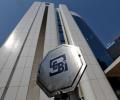
Capital markets regulator Sebi has imposed a penalty of Rs 10 lakh on Jayant Bhusare, who was one of the executive of Sampark Infotainment, in a case pertaining to the irregularities in the NSE's 'Dark Fibre' case. He has been directed to pay the fine within 45 days, the Securities and Exchange Board of India (Sebi) said in its order. On Tuesday, the regulator had levied a fine totaling Rs 44 crore on 18 entities, including NSE, Sampark, certain brokers and their respective past and present employees in the same matter.

The Securities and Exchange Board of India (Sebi) could soon issue interim orders imposing a market ban on the two former fund managers of Axis Mutual Fund (MF) for suspected front-running of trades, said people with knowledge of the development. "The market regulator has gathered prima facie evidence that demonstrates that the duo has violated the integrity of the market. "While a detailed investigation is still pending in the matter, Sebi could take action under Section 11 (4) to prevent further harm to the investors and the securities market," said a source.
 © 2026 Rediff.com - Advertise with us - Disclaimer - Privacy Policy - Sitemap - Feedback - About us - Terms of use - Grievances